
When I was preparing for the MCAT, I wasn’t in a position to “pause” everything else in my life. I was in full-time school, tutoring high school subjects to support myself, and doing clinical volunteering. I kept hearing stories of people who took three months off, studied 6-10 hours a day, and built their lives around the MCAT, but that just wasn’t realistic for me.
If you are trying to study for the MCAT while keeping up with work, school, volunteering, or any other important activities, this article is for you. I’ll walk you through exactly how I achieved a 100th percentile score on the MCAT without compromising my commitments or my wellbeing.
1. Mapping Out a Realistic Schedule
When I first started studying, I didn’t have a rigid day to day plan. Instead, I created a weekly schedule that worked around my existing commitments. Every Sunday, I would sit down, open my calendar, and map out the week ahead.
I started by blocking off all my non-negotiables—class times, tutoring sessions, and volunteering hours. Then, based on what was left, I set a realistic goal for how much time I could give to MCAT prep that week. Sometimes that was 10-20 hours. Other weeks, closer to 5 or 6, and that was completely fine. Then, if my Monday or Tuesday ended up being busier than anticipated, I could audible and squeeze in some extra time later in the week. Tracking things weekly instead of daily helped me stay consistent without feeling like I was constantly falling behind.
One tip that really helped was color coding my schedule. I used blue for MCAT study blocks, pink for school, beige for work, and green for personal. This made it easy to see whether I was actually giving myself balance. If you are not sure about where to begin with long-term planning, MCAT Self Prep’s Create-Your-Own Study Plan Course can help.
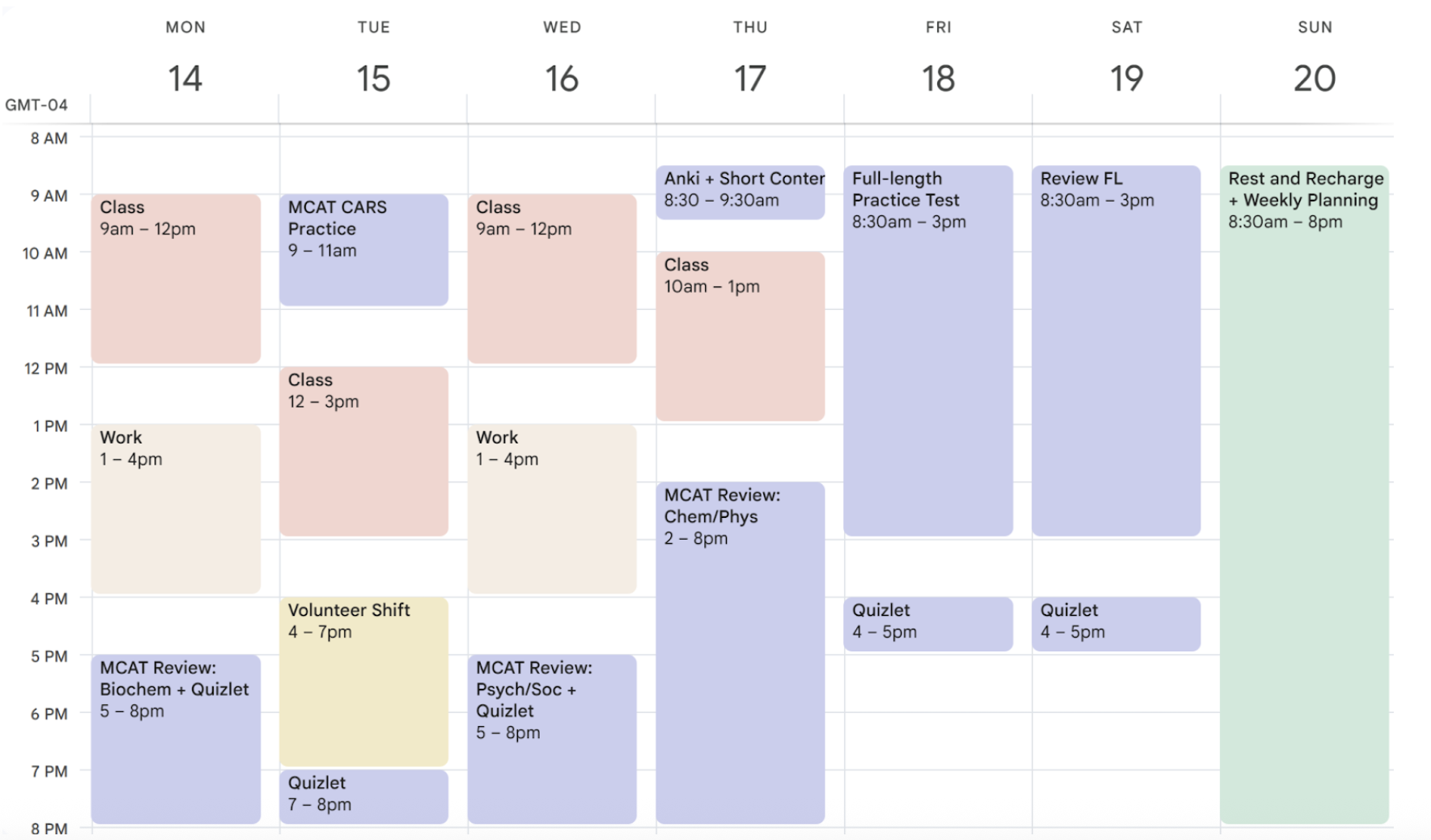
Example weekly MCAT schedule
2. Focus on Efficiency, Not Volume
With a full schedule, I couldn’t afford to study passively. I focused on active recall and used tools that helped me make the most of limited time.
What worked best:
- MCAT Self Prep’s 5,300+ Flashcards (get 360 for free!) for daily spaced repetition
- Practice questions from the AAMC Online Only Bundle, which has access to all of their questions and full lengths
- Additional 3rd party practice problems, full lengths and deep reviews on weekends
For help on knowing when to start doing full length exams, check out this article!
I rotated subjects throughout the week instead of trying to do everything every day, but other students may find it works better to focus on one subject at a time. Keeping a short list of weak areas helped me stay focused without getting overwhelmed.
3. Use Small Windows of Time
Some of my most consistent studying happened in between everything else—on the bus, during lunch, or right before bed. Even 10 to 15 minutes made a difference when used well.
Here’s what I did during those short breaks:
- Reviewed flashcards on my phone
- Listened to short podcast episodes while driving or on a bus
- Mentally recited amino acid properties while walking
Studying doesn’t always need to be in long blocks. These mini-sessions added up and helped me stay connected to the material every day.
For tips on how to make the best use of flashcards, check out this detailed article!
4. Stay Flexible and Don’t Panic If You Fall Behind
There were weeks when I barely touched my MCAT materials. Midterms, life, or just plain exhaustion got in the way. Instead of trying to “make up” every missed hour, I focused on what I could do.
Tracking my progress by the week instead of the day helped take the pressure off. I didn’t need to be perfect. I just needed to keep showing up when I could. Even if I missed my goal one week, there was always next week where I could adjust my goals or add extra study time to get back on track.
5. Schedule Breaks Like You Schedule Study Time
I used to feel guilty for taking time off, but I quickly realized that rest wasn’t optional for this marathon of studying. Every Sunday, I gave myself a break from MCAT prep. No flashcards, no passages, no guilt. I used that time to catch up with friends, go for walks, or just sleep in. Taking one full day off each week helped me avoid burnout and come back more focused. Treat rest as a key part of your study plan, not something you earn only after hitting a goal.
6. Start Early, Even If It’s Just a Little
I didn’t wait until I had the “perfect” block of free time to start studying. I began during the school year, even if it was just a few hours a week. That early start gave me the breathing room I needed to slow down during busy weeks without falling behind.
If you’re feeling overwhelmed, start small. Do a couple of flashcards. Review one quizlet deck. Watch one video. Building momentum matters more than waiting for the ideal schedule, and you can still check topics off of your studying list!
All in all, studying for the MCAT while keeping up with school, work, or volunteering is tough, but it’s 100 percent doable. You don’t need to follow a rigid routine or study 8 hours every day to get a great score. What matters most is consistent effort, flexibility, and knowing how to use the time you do have.
Start early if you can. Be realistic about what you can handle each week. Take breaks without guilt. And if you’re ever unsure about how to move forward, don’t hesitate to reach out for help.
MCAT Self Prep offers a ton of resources that can help:
- Free MCAT Prep Course
- Over 5,300 Flashcards
- Science Strategy Course
- 1-on-1 Tutoring with personalized support. You can request a free 10 minute phone consultation with one of our tutors at any time.
You don’t need to quit everything to succeed on this exam. You just need a plan that works for you.
 Want more FREE MCAT help?
Get free access to our 10 content modules based on the official AAMC outline, our 300+ hour video collection, and hundreds of AAMC-style flashcards and practice questions by joining our free MCAT Prep Course! Get started here!
You’ve got this.
Alyssa Liu


For more MCAT Tips:
Sign up for our affordable elite MCAT tutoring.
Sign up for our FREE MCAT Prep Course.
Follow us on:


 seconds